
Psychological Science Labs
Psychological Science Labs
Gain research experience in Psych Science's laboratories and research institutes.
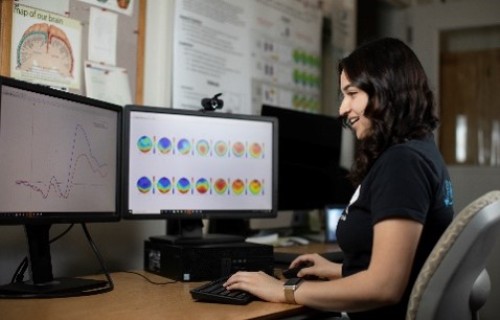
Psych Science majors conduct original research projects and publish with faculty. Labs provide hands-on experience in cutting-edge psychology research. Internships provide off-campus learning experiences in clinical and other types of work environments.
Each lab described below offers Undergraduate Research Assistant Positions with paid, work study, and course credit options. Contact the Faculty Director to find out if the lab is hiring new RAs and when hiring takes place.
AMPLIFY Lab
Led by Dr. Wendy de los Reyes, The AMPLIFY Lab is dedicated to supporting the healthy development of Latine and immigrant-origin adolescents and their families.
Our research team takes a strengths-based approach to youth development, centering the voices and experiences of young people as they navigate and challenge structural inequities. Our work is guided by three interconnected areas:
- Resistance — We examine how youth resist structural inequities through supportive relationships (mentors, parents, peers)
- Youth-Adult Partnerships — We explore how adults can partner in youth-led social change.
- Institutional Change — We investigate how institutions can expand youth voice and participation.
Through community-engaged scholarship, we work alongside Latine and immigrant families and youth to co-create knowledge that drives positive change.
Lab Positions: Students are accepted early in Fall and Spring semesters for research assistant positions. The AMPLIFY lab is currently accepting new RAs.
For more information, contact Dr. Wendy de los Reyes
Applied Mind and Health Laboratory
Integrating emotional, socio-cultural, and developmental perspectives, the AMH Lab at CMC focuses on examining the biological, social, and individual correlates of physical health and psychological well-being. We take a bio-ecological systems theory approach, which argues that multiple environmental and individual subsystems play important roles in influencing children’s development. We approach our work through the lens of the cultural-fit hypothesis, which emphasizes the person-situation interaction and highlights how psychological processes may vary across cultures and contexts. This understanding would lead to different solutions to the same problems of healthy adaptation and development, as well as acknowledging different strengths.
Our goals include:
- advancing understanding of how psychological states and social environments lead to health and disease
- disseminating and applying health psychology research to real-world settings
- educating relevant stakeholders including educators, students, parents, and policy makers on the importance of psychosocial factors for promoting health.
For more information, contact Dr. Stacey N. Doan who directs the AMH Lab
Berger Institute for Individual and Social Development
The Berger Institute for Individual and Social Development is directed by Dr. Stacey N. Doan. The institute is broadly interested in understanding structural and societal factors that influence adaptation and development across the lifespan. The Institute takes an interdisciplinary approach to its research and collaborates with faculty in a variety of fields including history, gender studies, and government.
Center for Applied Psychological Research
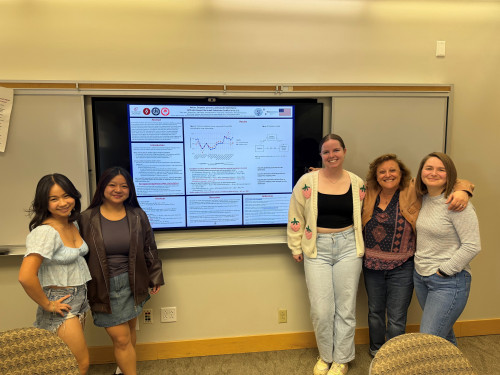
The research center explores the applications of psychological theories and research to two broad areas: the legal system and intergroup relations. Students in Psychological Science contribute to research in areas such as jury decision-making, expert testimony, the prediction of dangerousness, interrogations and false confessions, the death penalty, stereotyping, prejudice, and intergroup conflict.
For further information, contact Professor Costanzo, Professor Krauss, or Professor Levin.
Psychology, Law, and Policy Lab
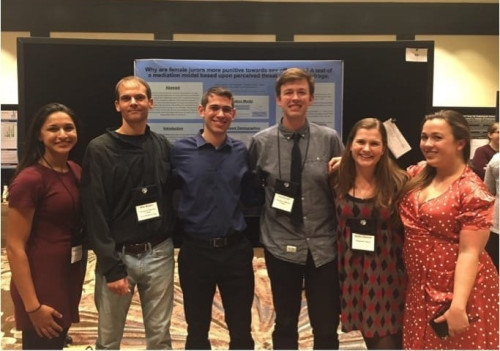
Whether you're a psych major or someone interested in the law, this lab with professor of psychology Daniel Krauss, J.D., Ph.D., who is a board certified forensic psychologist, offers undergraduates exposure to legal issues and research, including how juries make decisions with respect to psychology and law. "Students… will be working from an empirical perspective on legal questions,” says Krauss, whose own expertise includes jury decision-making and expert testimony. Students assist in research studies from start to finish––collecting results, analyzing data, and even presenting findings at professional conferences. Check out the lab website!
Lab Positions: Students are accepted early in Fall and Spring semesters for research assistant positions. Before applying to the lab, students should have taken at least one course with Professor Krauss.
For more information, contact Professor Krauss.
Analytics for Cognitive and Educational Development (ACED)
This lab integrates developmental psychology, data science, and AI/ML analyses to model and predict human cognitive performance—including intelligence, memory, STEM learning, and language development—across the lifespan. Research often focuses on educational and social implications, using longitudinal and hierarchical methodologies to measure changes in growth across multiple contexts. Students will gain experience in literature searches, scientific writing, data wrangling, interpreting results for research and policy audiences, and statistical analyses using R and Python.
Lab Positions: Students are accepted at any time.
Requirements: Completion of CITI training is mandatory, in accordance to CMC's IRB policy. Analyses are conducted in RStudio and Python (preferred). No prior experience is required—full training is provided—but you must be willing to learn one of these programs.
For further information, contact Professor Kanaya.
Claremont Autism Center
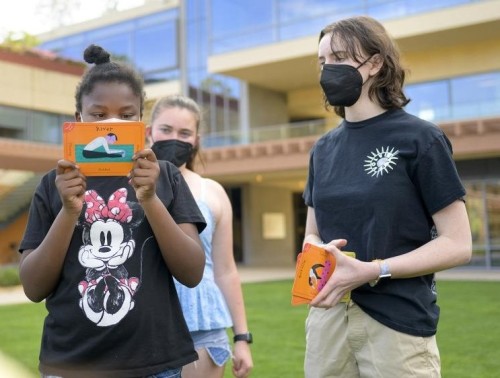
The Claremont Autism Center is a treatment and research facility for children with autism and their families. It is housed in the Leon Strauss Foundation Clinic on the 1st floor of Seaman Hall. Students who are interested in getting hands on experience providing behavioral intervention with the children may take courses and study in the Autism Center. Additionally, there are numerous research projects available for student participation. Please visit The Claremont Autism Center.
For further information, contact Dr. Rachel Fenning or the center's staff at (909) 621-8598.
Cognition and Data Visualization Laboratory

Research in this lab focusing on exploring how individuals perceive, attend to, remember, and make decisions about various types of information. Specifically, research investigates how variables influence processing of data visualizations and graphical literacy. Research assistants learn about theories that inform data visualization and/or prospective memory as well as practice cleaning, modeling, and visualizing data using R.
For further information, contact Professor Cook.
Cognitive Neuroscience Laboratory
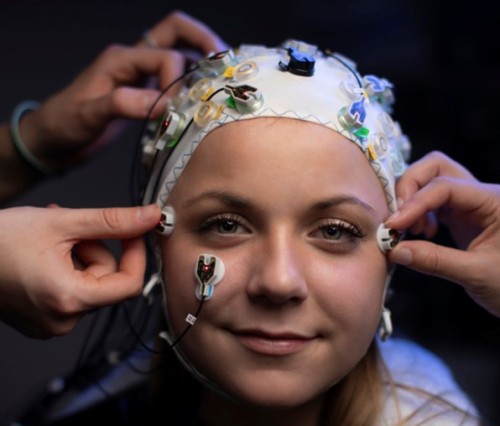
In the Cognitive Neuroscience Lab we use the tools of cognitive psychology, cognitive neuropsychology, and neurophysiology (EEG/ERP, biokinematics) to investigate how the body and its actions direct our cognition. A major focus of our research is to study changes in neural processing associated with healthy aging. Students can participate in all aspects of research: developing experiment ideas, recruiting participants, collecting data and interacting with participants, analyzing data, and presenting findings at professional conferences.
Lab Positions: Research Assistant applications are accepted at the beginning of each semester, although interested students may inquire at any time. Summer research opportunities may be available. RAs will be trained in EEG/ERP data collection and analysis at the beginning of Fall semester.
For further information, contact Professor Reed.
Cultural Influences on Mental Health Center
This center seeks to answer two primary questions. How does culture affect mental health? And, how do we improve the treatment of mental illness for those from diverse backgrounds? Students conduct research in areas such as immigration’s impact on family relationships, adaptation of mental health services for those from different backgrounds, cultural competence and mental health outcomes, and ethnic differences in dating preferences.
For further information, contact Professor Hwang.
Decision Neuroscience Laboratory
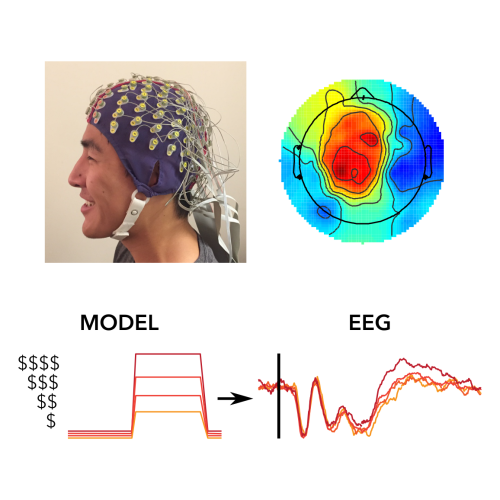
Research in the Decision Neuroscience Lab examines how valuation and decision-making emerge at the neural level, and how these cognitive processes interact during choice. Using neuroscience techniques such as event-related potentials (ERP), students will contribute to research on how decision-making unfolds over time, and across domains including social and economic choice.
Lab Positions: Students are accepted at the beginning of each semester. Summer research opportunities may be available.
For further information, contact Professor Harris.
Kravis Leadership Institute (KLI)
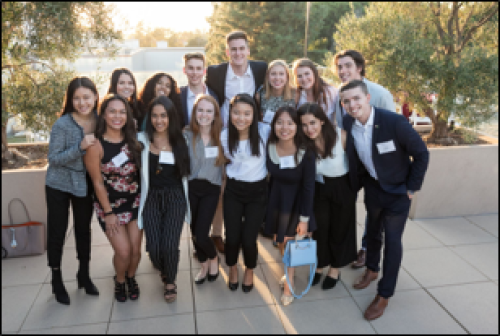
The Kravis Leadership Institute (KLI) sponsors leadership studies at CMC. The Institute hosts conferences, workshops, and speaker series, and conducts research on leadership applications, contributing to the growing body of knowledge in the field. See “Special Programs for details” at the Kravis Leadership Institute web site.
For further information, contact Professor Conger or Professor Riggio.
Memory and Aging Laboratory

Research in this lab examines memory in healthy aging, specifically investigating older adults’ prior knowledge and its influence on other aspects of memory. More broadly, we are interested in how knowledge works in memory, not only in older adults, but also in our memories for the stories of our lives (autobiographical memory), in our shared culturally-based experiences (collective memory), and in educational contexts. Students can participate in all aspects of conducting research including developing experiment ideas, recruiting participants, collecting data and interacting with participants, analyzing data, and presenting findings at professional conferences.
For further information, please contact Professor Umanath.
Methodological Examination of Teams Research in Inter-Cultural Settings (METRICS) Laboratory
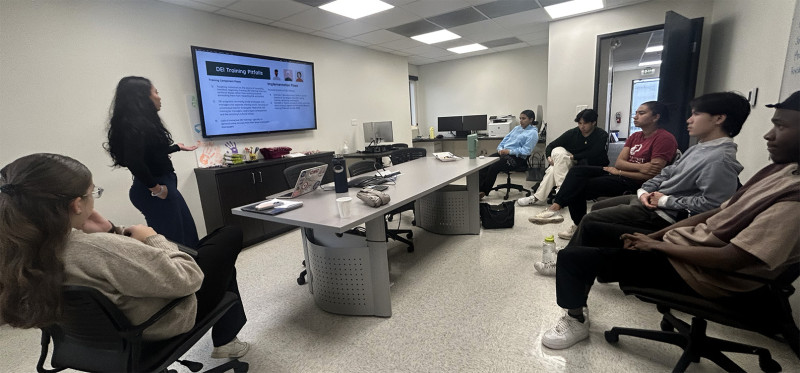
The goal of the METRICS Lab is to understand and improve team dynamics at work, especially those teams that are diverse in nature. To achieve this overarching goal, the lab focuses on teamwork, diversity and methods. An array of research projects, including qualitative, quantitative, and theoretical work, are ongoing. Specific examples of some of our papers include: (1) debunking some of the team assumptions through the lens of culture research, (2) coming up with lessons learned for extreme teams, and (3) how to measure ethnic identity. Ultimately, we seek to enhance the benefits of diversity in teams at work. Click to find out more about Metrics Lab
Lab Positions:
- To start in the Fall: Apply by August 1
- To start in the Spring: Apply by January 1
- To start in the Summer: Apply by March 1
- To learn more about the METRICS Lab: Reach out anytime!
For further information, please contact Professor Feitosa.
STATS Lab

Led by Dr. Steven Zhou, we use quantitative methods (ranging from traditional psychometrics & multivariate stats, all the way to the alphabet soup of ML/AI/NLP/LLM/GPT ), applied to phenomena in the organizational sciences.
- How can we better "measure" leadership using GPT and natural language processing?
- Why do careers and vocational interests develop or even change altogether over time?
- Can we use a social network to map academic co-authorship patterns?
- How can we use audio & visual data from in-person escape room games to study leadership, teamwork, and strategic planning?
Follow us on Instagram to stay in touch about upcoming research events and opportunities to get involved, and find out more at our website: www.statslabatcmc.com