
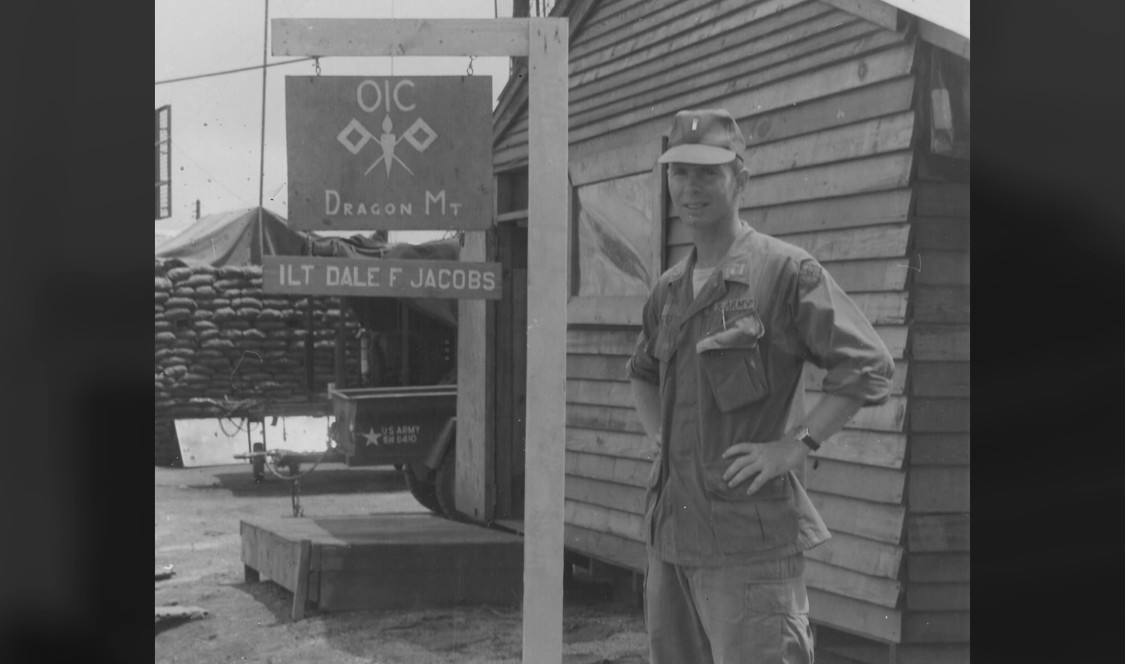
Dale Jacobs ’66 has a penchant for swapping. In Vietnam he swapped with a buddy who liked to go out on ambushes but didn’t like Civil Affairs calls on Montagnard villages. Dale enjoyed the Civil Affairs calls and enjoyed seeing the good work they accomplished. At Harris Bank in Chicago, he swapped with a colleague who worked in the International Division and spent one week a month traveling throughout Canada developing business opportunities for the bank. Several years later he swapped again with the same buddy to spend three years working in London at the bank’s London branch office and then extended for two more years.
Dale grew up in Milwaukee. CMC was his first college choice, but his application was turned down. Instead, he attended Drake University in Des Moines for his first two years, but CMC remained fixed in his mind. The college offered a wider view of the world that appealed to Dale, but he vacillated about reapplying because he had recently been elected to the student body government and had pledged a fraternity. He became good friends with the Dean of Men at Drake who offered some savvy advice Dale has always remembered and applied when having to make tough decision: how would you feel if you don’t apply? Would you regret the decision? So, Dale applied and was accepted. Again, he sought the Dean’s council about leaving Drake for sights unknown and was asked: how would you feel if you didn’t go? Would you ever regret that decision? The right decision then became obvious.
Dale came to CMC sight unseen and after a long drive to Arizona and then a bus ride to Ontario. Exiting the bus, he received his first introduction to Claremont and Southern California in the 60’s: SMOG! Dale had been in Air Force ROTC at Drake and had good feelings about the program. He joined the Corps of Cadets at CMC and reported to the drill field on his first day in an Army uniform. He was dressed down and made to do pushups by Robert “Bob” Day ’65 for not having shined shoes and polished brass. (Editorial note: Day became a major benefactor of CMC and is responsible for the construction of the Robert Day Science Center.)
While living in Beckett Hall, Dale became good friends with two other ROTC cadets: Dave “Coop” Cooper ’66, and Mike Fitzpatrick ’66. Before traveling to Ft. Lewis, Washington to attend ROTC Summer Camp in 1965, the three joined together for a trip to Mexico. Dale remembers the trip as “enjoying too many gin and tonics and coming away with a tremendous sunburn.”
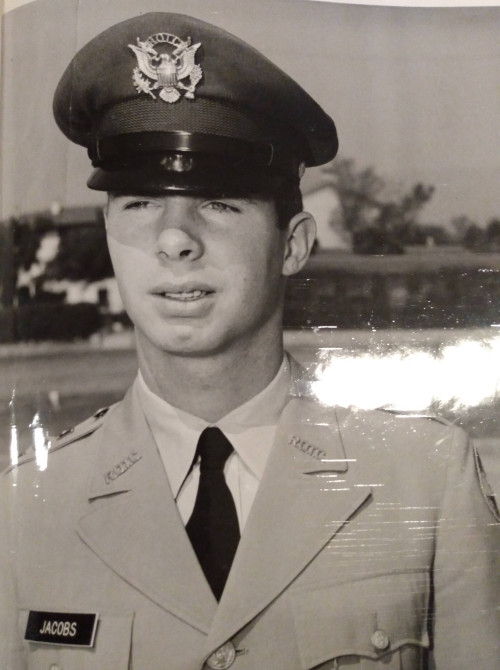
Dale’s father’s career was in telephone communications and sound systems for small business, so the choice of the Signal Corps (the choice had to be a combat arms branch) seemed right to him. As an ROTC graduate, he also had a choice of duty location and jokingly picked Malta, but he knew that choice was never in the cards. After graduation and commissioning as a Second Lieutenant, Dale traveled first to Ft. Gordon, Georgia for Basic Signal Corps Officer training. After that he went for further training at Ft. Monmouth, New Jersey for three very cold months during the winter where he got further training in his MOS (military occupational specialty). While at Ft. Monmouth he became friends with a captain whose next duty assignment was at the Pentagon to assign Second Lieutenants to their next duty stations.
The captain said all Signal Corps second lieutenants would be assigned to Vietnam upon their first anniversary of active duty. Dale’s goal was to complete his two years of active duty and begin graduate school and earn his MBA in the Fall. But since he went on active duty in October that meant he’d be discharged from active duty in October, thus missing the start of a new school year. He learned that rather than wait to be assigned to Vietnam he could volunteer to go for a one-year tour starting at his choice of month and would be discharged after serving nine-months in the US and one year in Vietnam. And that is exactly what he did. Following Ft Monmouth Dale was assigned to Ft. Hood Texas for a three-month assignment before leaving for Vietnam.
Arriving in South Vietnam in August of 1967, Dale found that his orders to the 1st Signal Brigade had been cancelled and after several days he received new orders to the 4th Infantry Division, situated at Camp Eneri outside Pleiku in the Central Highlands (II Corps). Arriving during the Monsoon period, Dale learned that General Peers, the Division Commander, had a policy that “all officers were infantry regardless of branch.” Then followed three arduous weeks of infantry training and combat tactical exercises in the field. Finally, Dale was assigned to the 124th Signal Battalion and began working on the installation of a new UHS/VHF phone and radio system on the base. The Division Commander needed to be able to communicate with his maneuvering field battalion commanders located many miles away and the new phone system would allow him to do that. Dale was part of a team that built a telecommunications hub at Camp Enei. This allowed voice communication to be passed to Dragon Mountain, a few miles outside the base camp via UHF/VHF. From there large antennae sent radio signals hundreds of miles to communicate with the field unit radios. Amazingly, despite multiple antennae standing atop the hill, the Viet Cong never attacked Dragon Mountain which was only defended at night by an Infantry Platoon.
While at Camp Eneri, all combat arms branch second lieutenants pulled rotating ambush patrol duty, taking a squad of infantry soldiers out to set up for a night ambush hoping to snare Viet Cong Guerrillas who would regularly probe the base camp’s defenses. Dale led these patrols on several occasions but preferred the other alternative which was to lead a team on civil affairs duty during the day into Montagnard villages. Another lieutenant buddy preferred night ambush patrols over civil affairs duty so Dale swapped assignments. Accompanied by a medic, the civil affairs team’s objective was to befriend the local Montagnard villagers, create good will and try to gain intelligence about Viet Cong activity in the area. Their efforts included building swings for the children, constructing latrines, building houses on stilts and other needed village projects. They also provided MedCap services treating wounds, cuts, and minor health issues. Dale enjoyed the work and felt he was doing something positive in the war effort.
For the first five months at the base camp Dale’s primary assignment was to manage implementation of the complex wiring and phone installation and build a switching complex to the UHF/VHF hill. He notes that he had some excellent Non Commissioned Officers. They were skilled and exceedingly competent at their jobs. His platoon sergeant, Sergeant Sanchez, schooled the young lieutenant on how to relate to people and listen to his men, lessons Dale took with him for the rest of his life.
There were two enterprising privates in Dale’s unit and on one evening he found them in one of the switching stations. These entrepreneurs had figured out a way to use the phone equipment to make MARS calls back to the US to talk with their girlfriends. At Christmas, Dale suggested to his Company Commander that it would be nice to have some Christmas decorations. The captain agreed, and said, “go get it done.” Dale challenged these same two enterprising soldiers into constructing a manger scene outside one of the Quonset Huts at Christmas, complete with figures and animals. Another highlight of his time at Camp Enri was attending the Bob Hope Show along with thousands of others and seeing Raquel Welsh and Miss Universe perform for the troops in the Ivy Bowl, named for the 4th division insignia.
After 4 months as Officer in Charge (OIC) of Dragon Mountain, Dale’s final assignment in Vietnam was to be in charge of the Company’s motor pool. This short-term assignment taught him the importance of vehicle maintenance and keeping vehicle logs current for each vehicle in the Company. This became a habit he continues to practice in maintaining his own gas engines.
Dale returned from Vietnam to Seattle, Washington in August of 1968, and true to his plan was released from active duty having served nine months in the U. S. and 12 in Vietnam. He made his way back to Milwaukee and had about a month before starting his MBA program. While in Vietnam he applied to Columbia and Northwestern and was accepted at both. He chose Northwestern and started an intense two-year program in finance and marketing. He roomed with another veteran who had served in Korea. The pair lived in Abbott Hall right on Lake Shore Drive the first year and an apartment on the north side of Chicago the second year. They worked hard and played hard.
In his second year, the MBA students found themselves being actively recruited by major corporations including all the major banks and consulting firms. All the big banks paid for trips to their home office and a full day in their city, including New York, San Francisco, and Los Angeles. Dale was interested in a consulting career but did not get an offer in that field, but plenty of offers in banking on both coasts. One bank offer was to join the Financial Consulting Department of the Harris Bank in Chicago, which was a combination of what Dale was looking for. He accepted, starting in August, 1970. Before starting his professional career, he and his buddy flew to Paris, rented a car, and drove all around Europe for six weeks.
Over the next several years Dale completed his Reserve duty requirement. Working for Harris, he became close to the consulting division manager who ultimately became president of the bank and nurtured and tutored Dale. Next, he swapped jobs with an associate working in the International Division of the bank and had the responsibility to develop banking opportunities throughout Canada with monthly business trips. In 1973 Dale married Maura Doane and they both continued working and enjoying life in Chicago.
Meanwhile his swapping buddy had moved on to work in the bank’s London branch office and after three years asked Dale if he’d like to replace him in London in charge of marketing. Dale and his new wife were thrilled at the idea and jumped at the opportunity for a three-year assignment that ultimately was extended to five. The couple adopted a baby girl (Diane) in 1978 and a baby boy (Mark) in 1980 in London.
After five years in London, Harris Bank wanted Dale to return to the US and head up Strategic Planning, reporting to the bank president. Dale wanted to stay on the customer side of the banking business as opposed to staff, but no agreement could be reached. So without a job to go back to, Dale resigned while still living in London knowing his work permit did not allow him to stay. He began an active job search of finding work in the US, writing letters, and exploring contacts and leads. He successfully landed a position with Keefe, Bruyette and Woods (now a division of Stifel Nicolaus & Company) and returned to the US to work in New York in their Corporate Finance Department. There he developed highly productive customer and professional relationships. He worked with the firm from 1981 to 1986 and then was recruited to join Bankers Trust in a new banking division.
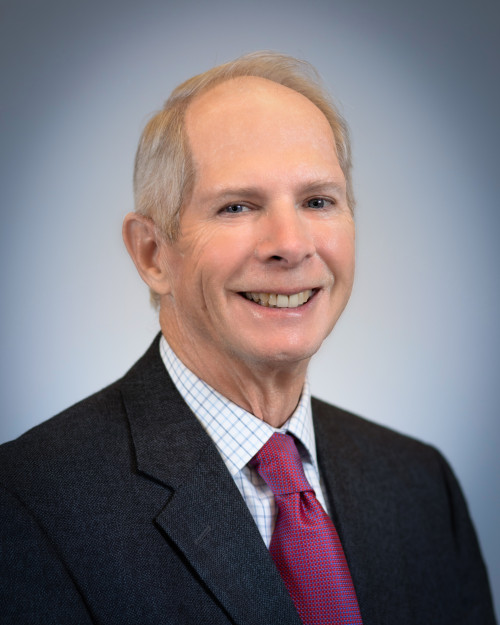
Meanwhile in 1990, the entrepreneurial bug had started to work its way into Dale’s mind. Something called hedge funds attracted his attention, and he started to investigate and interview hedge fund managers to learn as much as he could about them. Dale reached out to retired executives who had the talent and skills needed to manage a hedge fund start up focused on banking securities. He recruited three partners willing to join with him: a banking analyst, a stock trader, and a recognized name in the banking industry. Dale was the organizer and marketer and gradually the partnership of four came together. Ultimately, one of the partners wanted full ownership of the business and the partnership had to liquidate, but he states, “it was an excellent learning experience especially about the potential perils of partnerships without signed partnership and shareholder agreements.” After the liquidation, Dale and his wife formed Hedge Fund Securitie, Inc. to recruit speakers for seminars on the hedge fund business which became an extremely popular enterprise.
After his first wife’s death, Dale married Betty Mattran in 2000 and retired from paid work. He grew up in an entrepreneurial family very connected to community and volunteering. Those values are still a part of his life today. In Montclair, New Jersey he served as president of the Montclair Economic Development Corporation, Treasurer of the Montclair Parking Authority, one of the organizers of the Montclair Arts Commission, had leadership roles in his church and on the board of the Partners for Health Foundation. Since moving to Vero Beach, Florida in 2004, he has served as president of the Grand Harbor Community Outreach Program, Vice Chair of the Indian River Community Foundation (a donor advised fund), Chair of the Children’s Home Society of Florida and Chair of his church’s Finance Committee.
His current passion is to address the need for affordable workforce housing in his home county. He has formed a Florida nonprofit corporation to work on the need. Dale notes that being a volunteer is challenging because, “you can’t fire people and you have to put up with a lot of personalities that often do not accomplish their assigned tasks.”
Thinking back over his career, Dale believes he has been incredibly lucky. He has traveled all over the world, worked with exceptionally talented people, has had wonderful experiences and has enjoyed a very full life. He and his wife still spend a few months each year in New Jersey, but Florida is where they call home. He is grateful to CMC for providing him with a worldly view and establishing a pattern of learning and growth in his military, finance, and voluntary careers.
His Life Lessons Learned are simple, to the point, and come from all three areas of accomplishment:
- Stay organized
- Maintain attention to detail
- Listen to people
- Have a vision of what you want to do
- Do no harm