
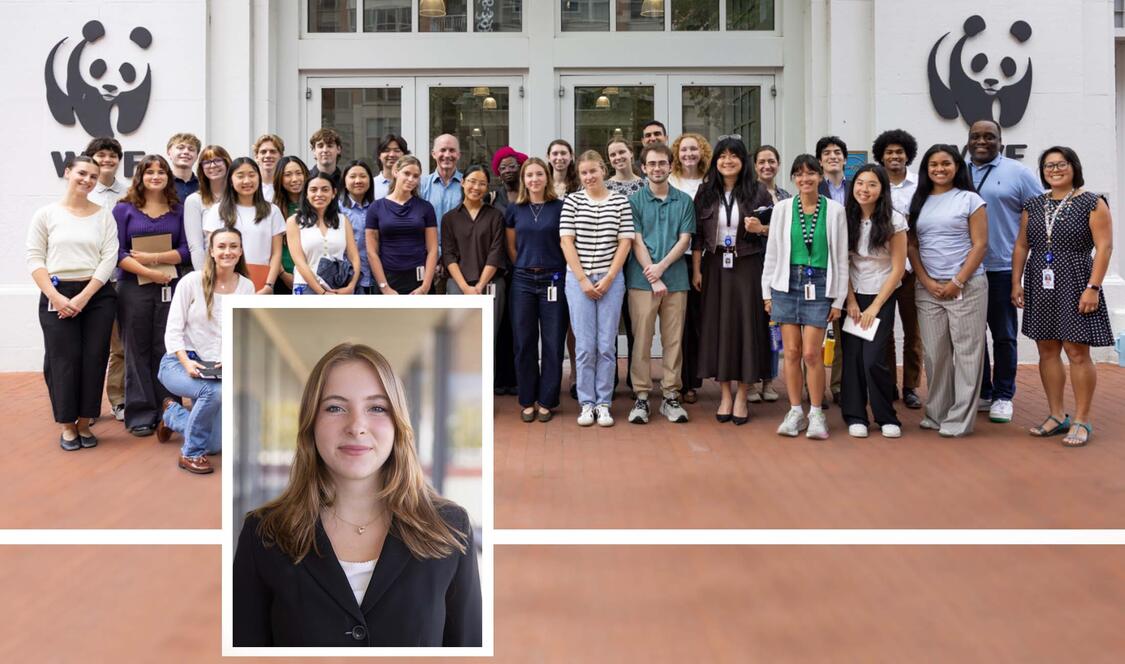
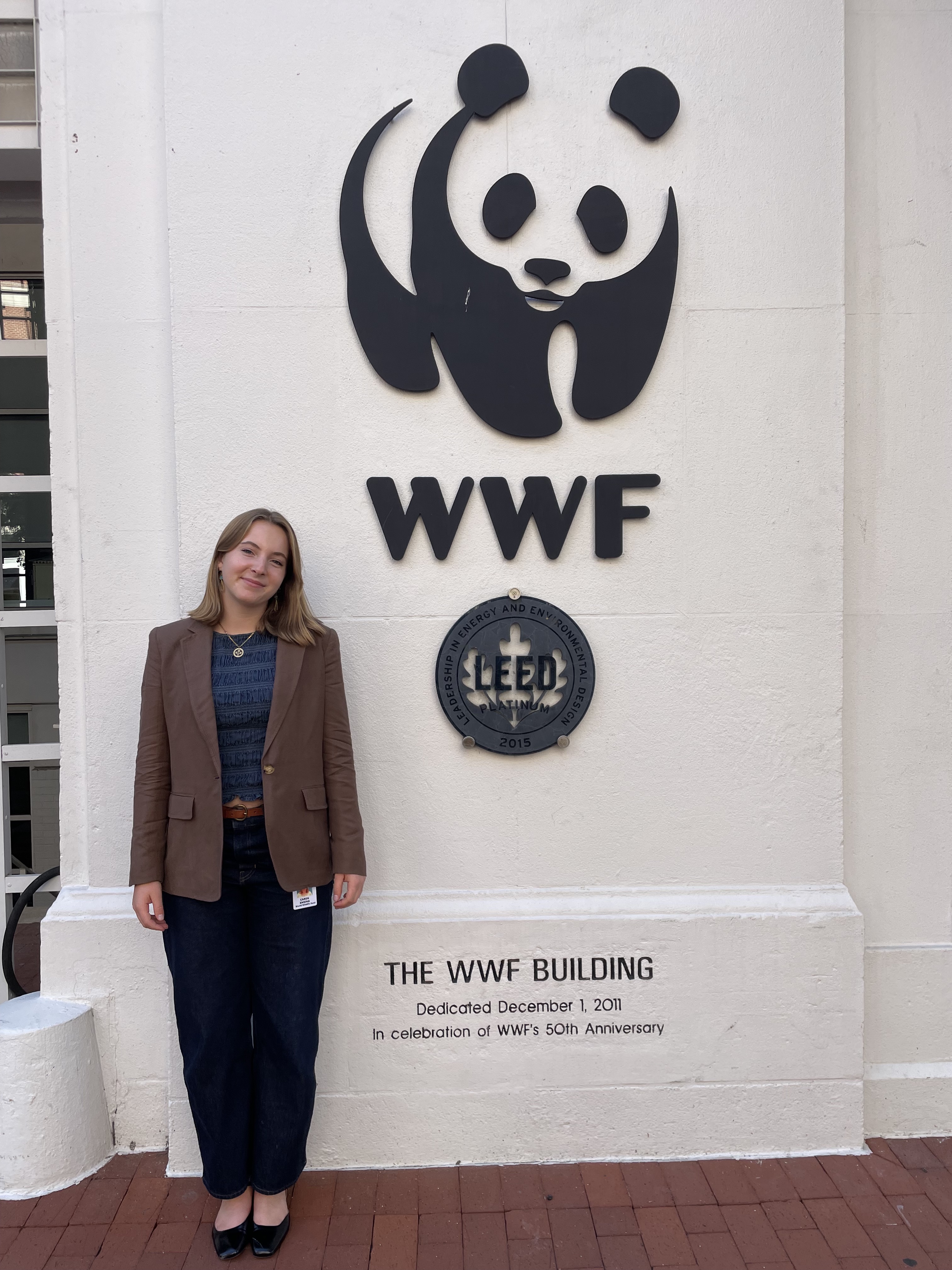
For Caren Ensing ’27, the road to a summer internship with the World Wildlife Fund’s Blue Finance team began, surprisingly, while solo backpacking through Chile.
“I met a woman who came up to my table outside a park and asked if she could sit with me,” Ensing recalled.
The two struck up a conversation, and Ensing mentioned she had just wrapped up a study abroad program in Argentina. As it turned out, the woman’s daughter was a CMC alumna, and the woman herself a World Wildlife Fund (WWF) board member. A chance introduction turned into a series of calls—first with WWF’s head of philanthropy, then with the head of impact investing—and by the time the dust settled, the organization had built a role for Ensing on its Blue Finance team, funded through CMC’s Soll Center for Student Opportunity.
Supported by CMC’s Sponsored Internships & Experiences (SIE) program, Ensing spent a semester abroad in Ushuaia, Argentina, where she lived with a host family, worked at a Spanish-language research station, and studied microplastic pollution in the Beagle Channel—research that later fed directly into her WWF work.
It’s the kind of story that sounds too good to be true, but Ensing said it reflects something real about CMC: It is an environment that rewards curiosity and gives students the resources to chase it.
“There are so many opportunities for real-world professional development for students, and we get (funding) to do it, which is not necessarily the case in other places,” she said. “That has been a huge highlight for me and so important in my development.”
Ensing chose CMC out of high school because she wanted a small, tight-knit community with strong faculty relationships, paired with the reach of the wider 5C consortium. She arrived with an interest in government, drawn to CMC’s reputation in the field and its “learning by doing” ethos, which matched how she likes to work.
Ensing is a dual Political Science/Government major at CMC with an environmental analysis focus on the economics track at Pomona College. That combination took shape sophomore year at CMC, when she began working at the Roberts Environmental Center (REC). “I think REC has been really foundational in my interest in the intersection between economics and the environment,” she emphasized.
Through the REC, Ensing researched how venture capital firms invest in female-founded agriculture and climate companies, conducted market research for a company in the corporate sustainability reporting space, and studied air quality with the City of Pomona. The experience pushed her toward a self-designed path. “I was working at the intersection of all of these things,” she said. “Blue Finance was the best of all of those worlds.”
At WWF, Ensing worked on a project ranking how banks invest in ocean-related sectors, developing criteria in partnership with the UN Financial Initiative and reviewing bank disclosures for legal compliance and sustainability practices. She also coordinated with partner NGOs on project management and researched financial instruments used in blended finance. It was, she said, a natural convergence of her academic interests: government and policy shaping what sustainable investment looks like, economics driving how capital moves, and a throughline of environmental impact tying it together.
Ask Ensing about her CMC highlights, and the professional and personal quickly intertwine. A lifelong skier and former ski instructor from Seattle, she competes on the 5C Ski and Snowboard Team and credits CMC’s Outdoor Initiative with getting her—and countless other students—outside. “CMC has a great community for being active and doing things outdoors,” she said. “That’s been a major highlight.”
As she enters her senior year, Ensing is weighing opportunities in sustainable finance and environmental consulting, with an eye toward continuing work in conservation. She’s also staying busy on campus: serving as a Resident Assistant, working as a Romero Success Coach, and stepping into the role of oversight manager at the REC.